
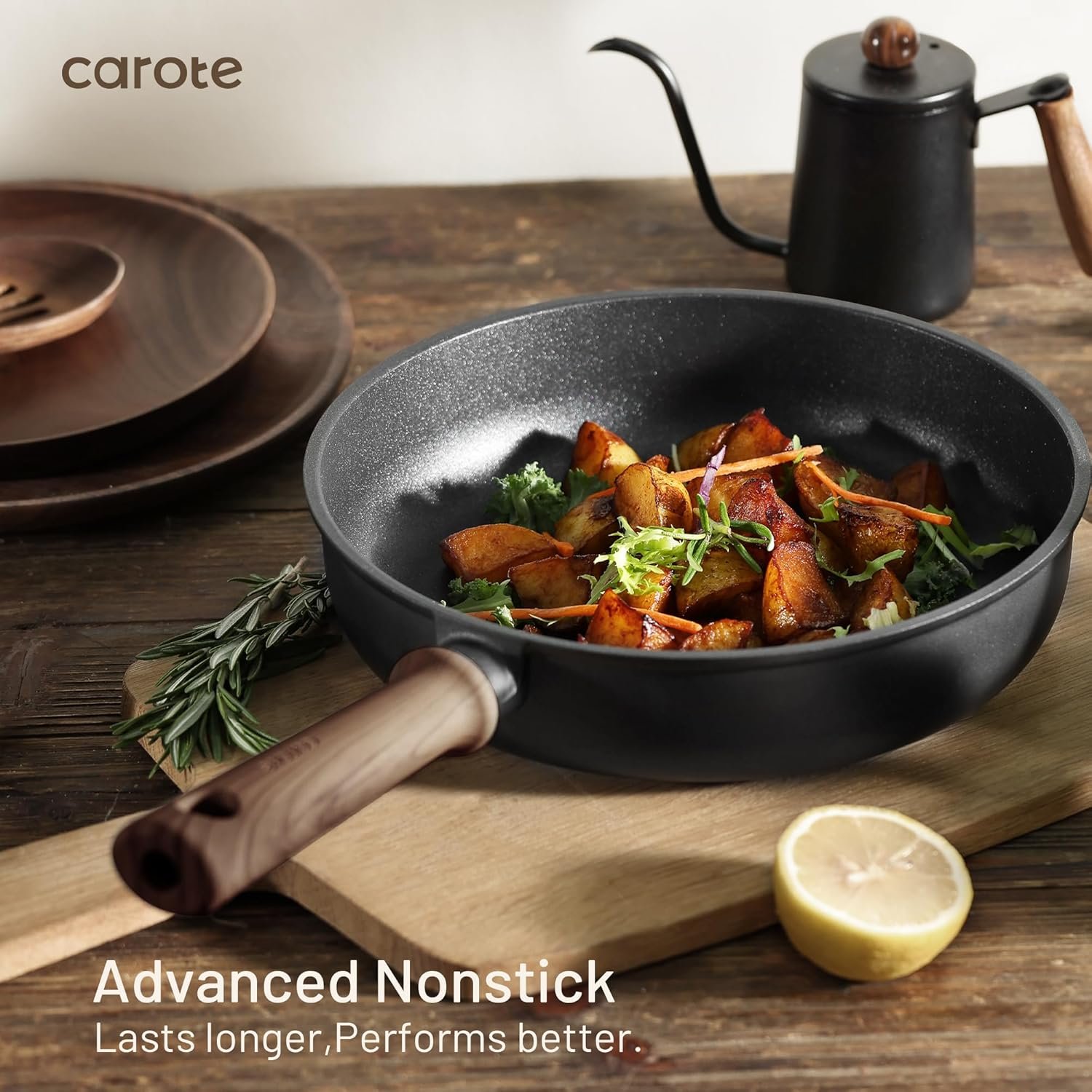
A good nonstick pan is one of the most essential tools in any kitchen. Whether you're frying eggs, flipping pancakes, or cooking delicate fish, the right pan makes cooking easier, faster, and cleaner.
But not all nonstick pans are created equal. From coating types to durability and heat distribution, choosing the right one can make a big difference in your cooking experience. This guide will help you understand what to look for so you can confidently pick the best nonstick pan for your needs.
1. Consider Size and Cooking Needsy and Usage Needs
When choosing a nonstick pan, size matters more than you might think. A small pan works well for single servings like eggs or omelets, while larger pans are better for family meals.
If you cook a variety of dishes, having multiple sizes can be helpful. However, a 10–12 inch pan is usually the most versatile option for everyday use.
2. Types of Nonstick Coating
The coating is what makes these pans special, and different types offer different benefits.
Each type performs well, but durability and safety often depend on how you use and maintain the pan.
3. Heat Distribution & Performance
A quality nonstick pan should heat evenly to avoid hot spots that can burn food.
Pans made with aluminum or hard-anodized materials tend to offer better heat distribution. This ensures consistent cooking results, whether you're sautéing vegetables or searing meat.
Even heating not only improves taste but also reduces cooking time.
4. Handle Comfort & Safety
A pan should feel comfortable and secure in your hand. Heat-resistant handles are important, especially if you cook frequently.Look for ergonomic designs that provide a firm grip. Some pans also come with oven-safe handles, which can be useful for recipes that require finishing in the oven.
5.Cleaning & Maintenance
One of the biggest advantages of nonstick pans is easy cleaning.
Most can be cleaned with just warm water and a soft sponge. Avoid using metal utensils or harsh scrubbers, as they can damage the coating.
Proper care will keep your pan performing like new for a long time.
6.Durability & Value
Not all nonstick pans last the same. Cheaper pans may wear out quickly, while higher-quality ones can last for years.
Instead of choosing the lowest price, focus on long-term value. A slightly more expensive pan with better coating and build quality will save money over time.
Conclusion
Choosing the right nonstick pan doesn’t have to be complicated. By focusing on size, coating type, and durability, you can find a pan that makes everyday cooking easier and more enjoyable.
Whether you're a beginner or an experienced cook, the right nonstick pan will quickly become your go-to kitchen essential.
Comments (0)